
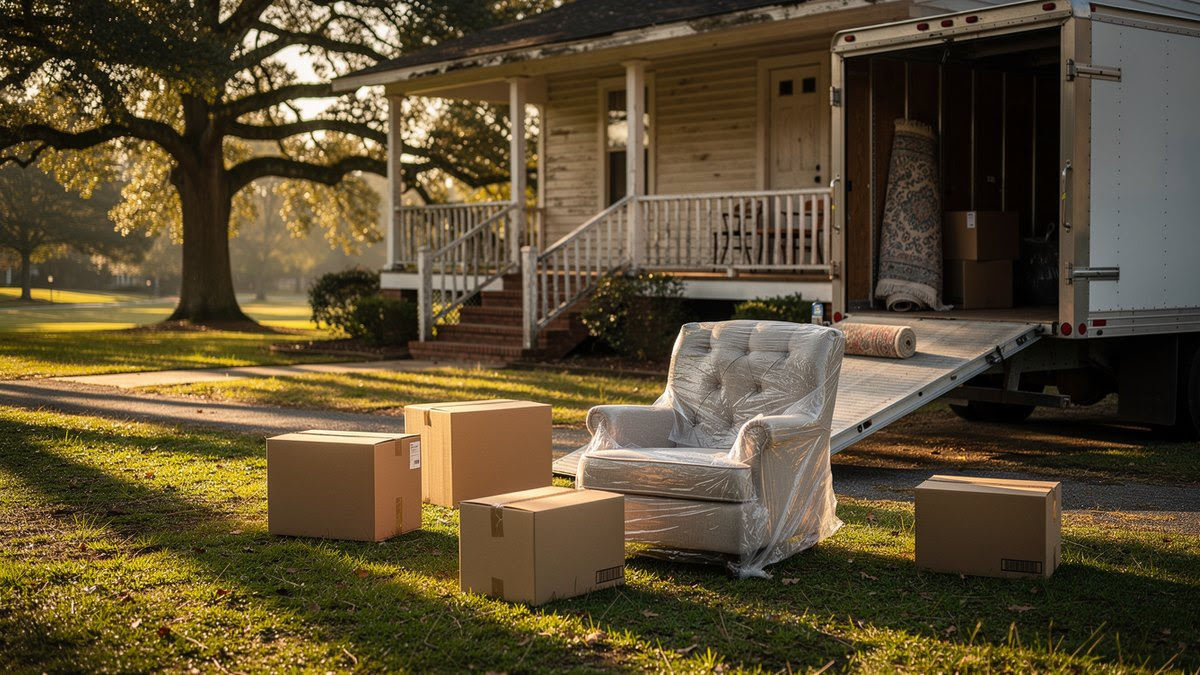
Renting vs buying in Anderson County: what the 2026 market shift means for movers, and how short-term storage bridges the gap between move-out and move-in.
Ask around a kitchen table in Anderson these days and you will hear the same conversation happening in a dozen versions. A young couple working at Bosch is trying to decide whether to renew a lease or start looking at listings. A family in North Anderson has outgrown the house they bought as newlyweds. Somebody's parents are downsizing and wondering whether owning still makes sense at all. Renting vs buying in Anderson County has stopped being a simple math problem and turned into a question about timing, flexibility, and how long you plan to stay put.
There is no single right answer, and anyone who tells you otherwise is selling something. What there is, though, is a set of local realities worth understanding before you sign anything. Anderson is not a generic Southern market. It sits twenty-five minutes from Clemson, a short drive from Lake Hartwell, and inside an employment base anchored by manufacturing and healthcare. All of that shapes what housing here does. Here is how to think it through, and how to handle the messy in-between when you finally decide to move.
Most people frame the rent-or-buy decision as a cost comparison. Monthly rent on one side, mortgage payment on the other, whichever number is smaller wins. That framing is tidy and it is also incomplete, because it leaves out the single variable that matters most: how long you actually intend to stay.
Buying carries real costs that do not show up in a monthly payment. Closing costs, inspections, the appraisal, the first weekend at the hardware store discovering that the previous owner's idea of a repair involved a lot of caulk. Those costs get absorbed comfortably over a long stretch of years and painfully over a short one. If your job situation, your family size, or your plans for the next few years are genuinely uncertain, renting is not a failure to launch. It is a reasonable purchase of flexibility.
Owning, on the other hand, does something renting cannot: it fixes your housing cost in place. A lease renews on someone else's schedule and at someone else's number. A fixed-rate mortgage payment stays where it is while everything around it moves. In a county where new residents keep arriving for work and for the lake, that predictability carries weight. There is also the harder-to-price part — the freedom to knock out a wall, plant a tree you expect to sit under, or paint a kid's room whatever color they want this year.
The honest version of the question sounds less like "which is cheaper" and more like this: How confident am I that I will still want to live in this specific part of Anderson County several years from now? If the answer is very, buying starts making sense quickly. If the answer is a shrug, a lease and a good savings habit may serve you better than a deed. And it is worth remembering that renting is not permanent either. Plenty of people in the Electric City rent for a year or two on purpose, bank the difference, and buy with a clearer picture of what they actually want.
Local housing markets are downstream of local employment, and Anderson's employment base is unusually steady for a city this size. Bosch and Michelin anchor the manufacturing side. AnMed Health and Anderson County government employ a broad range of people across a broad range of pay. Anderson University brings roughly 3,400 students into the city, along with faculty and staff who need places to live nearby. Clemson University sits about twenty-five minutes up the road, and a meaningful number of people who work or study there choose to live in Anderson instead, then commute.
That mix creates a housing market with several different engines running at once. Student-adjacent rentals behave differently from family neighborhoods, which behave differently from lake-oriented property near Hartwell's roughly 962 miles of shoreline. When people talk about "the Anderson SC housing market 2026," they are usually describing whichever slice they happen to be shopping in. A rental near campus and a three-bedroom off a quiet county road are not really competing with each other, even though they show up in the same conversation.
The broader shift worth paying attention to is the relationship between borrowing costs and inventory. When financing gets more expensive, some would-be buyers step back into the rental pool, and some would-be sellers stay put rather than trade a comfortable existing loan for a costlier new one. Both effects tighten what is available. When financing gets cheaper, the pent-up movers on both sides tend to arrive at once, and competition picks up. Anderson County real estate trends generally follow that rhythm, softened somewhat by the fact that this area still builds new housing and still has land to build it on — something you cannot say about every growing market in the Southeast.
The practical takeaway for anyone weighing renting vs buying: do not try to time the market perfectly. Nobody calls the bottom, and the people who wait for a perfect month usually spend that month paying for housing anyway. Watch what is actually available in the neighborhoods you would genuinely be happy in, get your financing conversation out of the way early, and be ready to move when the right thing appears.
Anderson rewards people who look at more than one part of town. Each area has its own personality, its own housing stock, and its own reasons to rent or to buy.
One underrated strategy: rent first in the general area you think you want, then buy there once you know it. A lease is a relatively inexpensive way to test a commute, learn which grocery run is actually convenient, and find out whether the neighborhood suits you on a Tuesday night rather than just on a Saturday tour. Drive the route to work at the hour you would actually drive it. Walk the block after dinner. Some streets that look identical on a listing map feel completely different once you live on one of them.
It is also worth noting how much of Anderson's housing stock carries the city's history in it. This was a textile town, and old mill buildings still stand around the area, some repurposed, some waiting. Neighborhoods that grew up around that work have a density and a scale you do not get in newer subdivisions — smaller lots, closer porches, sidewalks that actually go somewhere. Whether that appeals to you is a matter of taste, but it is a real difference, and it is one of the things that makes the rent-or-buy decision here feel local rather than generic.
Here is the part nobody warns you about. Whichever way you go — renting to owning, owning to renting, one rental to another — the calendar almost never cooperates.
Leases start on the first of the month. Closings get pushed for underwriting, for a repair the inspector flagged, for a title issue nobody saw coming. Sellers ask for a few extra days of possession. Buyers ask for a rent-back. The moving truck you reserved is available Thursday and only Thursday. You end up with a gap: days or weeks where your lease has ended but your keys have not arrived, or your house has sold but the new place is not ready.
People handle this badly all the time, and it costs them. They double-move everything, hauling boxes to a relative's garage and then hauling the same boxes again three weeks later. They pay for extra hotel nights because a truck full of furniture is parked in a driveway. They agree to a bad closing date purely because they have nowhere to put their belongings, or they let a good offer slip because they cannot align the dates.
The better approach is to plan for the gap from the very beginning, before it becomes an emergency. A few habits that help:
Moving between rentals and homes is far less stressful when the plan assumes the dates will slip, because they usually do. Treat your timeline the way you would treat a forecast in a Carolina spring: mostly right, occasionally very wrong, and worth carrying an umbrella for.
This is where a short-term unit earns its keep. Renting a 10x10 or a 10x20 for a month or two turns a hard deadline into a flexible one. Furniture, boxes, and seasonal gear go in on your schedule, and you walk into closing without a truck idling outside. If the date moves, your belongings are already handled. It helps on the selling side too — anyone listing a home hears the same advice about clearing out excess furniture so rooms photograph well and feel larger in person, so storage during a home purchase often begins as staging storage weeks earlier. At Bleckley Street Self Storage we see both halves of that: renters between leases, buyers waiting on an appraisal, families moving back from Clemson or heading out toward the lake. A 10x10 handles roughly the contents of a one- or two-bedroom apartment; a 10x20 is closer to a full household with appliances and garage overflow. Our 24/7 access matters more than people expect during a move, because the loading rarely happens at a convenient hour.
Whichever way the renting vs buying decision lands for you in Anderson County, the transition itself deserves a plan. Sort out where your things will live before you book the moving truck, and everything downstream of that gets easier — the closing date, the lease start, the Thursday-only truck. Anderson has been absorbing new arrivals and shuffling its own residents between neighborhoods for generations, and the move is always the messy part. If you want help figuring out what size fits your situation, call us at (864) 351-4023 or stop by 401 Bleckley St, Anderson, SC 29625. We would rather help you plan ahead than watch you scramble.
Frequently asked questions |
Is it better to rent or buy in Anderson County right now? It depends far more on how long you plan to stay than on the monthly payment comparison. Buying carries upfront costs — closing costs, inspections, immediate repairs — that spread comfortably over many years and painfully over one or two. If you are confident you want to be in the same part of Anderson County for the long haul, buying starts to make sense. If your job, family size, or plans are genuinely uncertain, renting buys you flexibility, which has real value. |
What shapes the Anderson SC housing market compared to other areas? Anderson's housing market runs on several engines at once. Manufacturing employers like Bosch and Michelin, healthcare through AnMed Health, and Anderson County government provide a steady employment base. Anderson University enrolls roughly 3,400 students, and Clemson is about 25 minutes away, so student and commuter demand plays a role. Lake Hartwell, with roughly 962 miles of shoreline, creates a lake-oriented segment that behaves differently from in-town neighborhoods. |
How long should I rent a storage unit during a home purchase? Most people in a transition need somewhere between one and three months. Closing dates slip, lease start dates rarely line up with move-out dates, and work on the new place often takes longer than planned. Month-to-month storage lets you keep the unit only as long as the gap lasts. At Bleckley Street Self Storage, the first month is free with a refundable deposit, which often covers the whole waiting period. |
What size storage unit do I need when moving between rentals and homes? A 10x10 unit generally handles the contents of a one or two bedroom apartment, or the excess furniture and boxes cleared out of a house before showings. A 10x20 is closer to a full household — larger furniture, appliances, and the accumulated contents of a garage. If you are unsure, call (864) 351-4023 and describe what you are moving; it is easier to size a unit from a real inventory than from a guess. |
Should I rent in a neighborhood before buying there? It is an underrated strategy. A lease is a relatively inexpensive way to test a commute, learn the practical rhythms of an area, and find out whether a neighborhood suits you on an ordinary weekday rather than just during a Saturday showing. Areas like Boulevard, North Anderson, Homeland Park, and Pendleton each feel quite different day to day, and living in one for a year tells you more than any tour will. |