
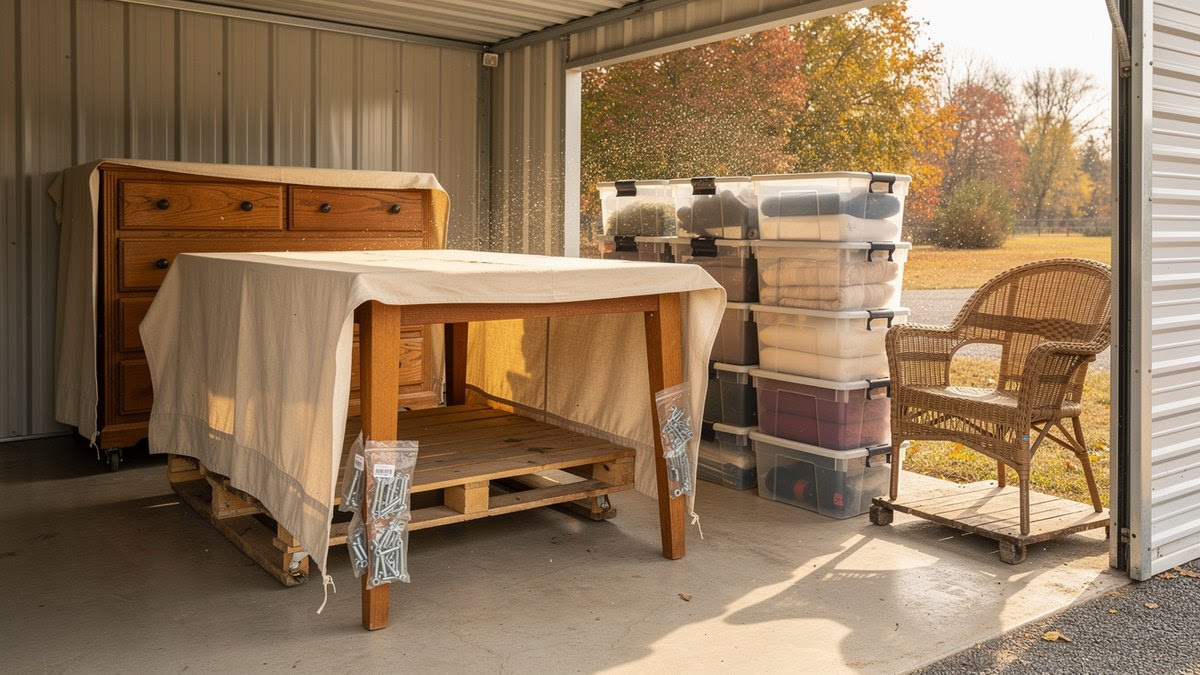
Protecting stored furniture from Upstate humidity takes airflow, covers, and raised pallets. Practical furniture storage tips for Anderson SC families.
There is a stretch of November in Anderson when the weather simply refuses to commit. You scrape frost off the windshield before work, and by two in the afternoon you are driving home with the windows down. That back-and-forth is part of living in the Upstate, and most of us have stopped noticing it. Furniture notices. Protecting stored furniture from Upstate humidity is one of those chores that nobody thinks about until they pull a dresser out of a garage in March and find the drawers swollen shut, or lift a patio cushion and catch that unmistakable damp smell.
This is the season it matters most. Across Anderson County, people are hauling patio sets into garages, clearing the guest room for relatives, and dragging holiday bins out from under the stairs. Pieces get shuffled, stacked, and forgotten. The good news is that moisture damage is almost entirely preventable, and the fixes are cheap, low-tech, and easy to do in an afternoon. Here is how to put furniture away in the Electric City so it comes back out looking the way you left it.
Anderson sits in a corner of South Carolina where moisture has plenty of places to come from. Lake Hartwell wraps around a good portion of the county with its long, winding shoreline, and the broader region is simply a damp one, with warm fronts and cool fronts trading places in ways that can flip a forecast overnight. Summer here is famously sticky. Fall and winter are sneakier.
The trouble is not steady dampness so much as the swing. A cold front rolls through, temperatures drop overnight, and everything stored in an uninsulated garage or shed chills down with the air. Then a warm, wet front follows a day later, pushing humid air over surfaces that are still cold. Moisture condenses out onto those surfaces the same way it beads on a glass of sweet tea in July. You cannot always see it happening. You just see the result months later.
Repeat that cycle over and over between Thanksgiving and the dogwoods blooming, and you have given your furniture a long, slow soaking and drying treatment. Wood absorbs and releases that moisture every single time. Metal hardware does what metal does when it gets wet. Foam and fabric hold what they take in. None of it is dramatic on any one night, which is exactly why it sneaks up on people.
It helps to know what you are fighting. Humidity and wood furniture have a specific, predictable relationship, and understanding it tells you where to focus your effort.
Wood is hygroscopic, which is a ten-dollar word for the fact that it drinks in water from the air and gives it back when the air dries out. As it does, it moves. Not evenly, either. Boards swell more across the grain than along it, so a solid tabletop widens and narrows with the seasons while its length stays nearly the same. Over repeated cycles, that movement shows up as:
Metal is simpler and just as annoying. Hinges, drawer slides, bed rails, bolts, and the frames of outdoor furniture all develop surface rust in damp conditions, and rust stains the wood and fabric around them. Upholstery and foam cushions hold moisture longer than anything else in the house, which is why they are usually the source of that musty smell. Leather can bloom with a hazy film. Even mirrors and framed art can suffer, with moisture creeping behind the glass and spotting the backing.
Half of moisture protection happens before anything gets put away. Rushing this part is the single most common mistake, and it usually happens because people pack on a Saturday when they wanted to be watching Clemson play.
Clean everything, then let it dry longer than you think it needs. Dirt, pollen, body oils, food residue, and lawn clippings all hold moisture and feed mildew. Wipe wood with a barely damp cloth and dry it immediately. Vacuum upholstery thoroughly, including under the cushions and along the seams. If you wash patio cushions or slipcovers, give them days in the open air, not hours. A cushion that feels dry on the outside can still be damp at the core, and sealing that up is how you grow a science experiment.
Condition the wood. A coat of paste wax or a quality furniture polish on finished surfaces adds a thin barrier that slows moisture exchange. It is not armor, but it buys you time and it makes the piece look better coming out than going in.
Protect the metal. Wipe hinges, slides, bolts, and outdoor frames with a light machine oil or a rust-inhibiting spray. Bag small hardware in labeled zip-top bags and tape the bag to the underside of the piece it belongs to, not to the finished surface.
Break it down. Remove table legs, take bed frames apart, pull out drawers and mirrors. Disassembled pieces take less space, stack more safely, and give air room to circulate around every surface instead of trapping it in a sealed box of furniture.
Empty the drawers. Clothing and linens left inside a dresser hold moisture against the wood from the inside out.
Once your pieces are clean and dry, the whole game is airflow plus a barrier against the two places moisture comes from: the floor and the air above.
Every fall, Anderson households run the same rotation. The patio set, the grill cover, the lake chairs, the umbrella, and the kids' outdoor gear all need a home for the winter, and the holiday bins need to come out of wherever they were crammed. The two jobs collide in the same garage on the same weekend, and something always ends up stacked in a corner where it should not be.
Outdoor furniture deserves extra attention because it has already spent a season absorbing everything the Upstate threw at it. Wicker and rattan are particularly thirsty and should be stored off the ground with air on all sides. Teak and other hardwood patio pieces hold moisture in the grain long after the surface feels dry. Metal frames need that rust-inhibiting wipe-down. Cushions, as always, go into sealed bins once they are genuinely dry all the way through.
Holiday items have their own moisture problems in reverse. Glass ornaments, artificial greenery, wreaths, and strings of lights live in bins that sit untouched most of the year. If those bins were packed damp or stored on a bare floor, you find out when you open them in late November. Rigid bins with tight lids, stored up on pallets or shelving, keep next year's decorating pleasant instead of disappointing. And if the garage is now full of patio furniture, the holiday bins need somewhere else to live.
This is where a dedicated storage unit earns its keep. A garage in Anderson is often the worst available option because it has a cold concrete slab, a big uninsulated door, and a car that comes in wet from the rain and steams the whole room. A storage unit gives you a clean, enclosed space you control, and it gives you room to do the job right rather than stacking furniture three deep against a wall.
At Bleckley Street Self Storage, a 10x10 at $75 a month holds the contents of a bedroom or a full patio set with space to leave air gaps between pieces. A 10x20 at $120 a month handles a houseful during a move between homes in Boulevard, North Anderson, or out toward Pendleton. The first month is free with a refundable deposit, which is handy when the swap is temporary. Bring pallets or risers so nothing touches the floor, breathable covers for the wood, and sealed bins for cushions and linens, and you have built a genuinely protective setup. With 24/7 access and 24/7 security surveillance, you can swing by on a mild afternoon, open the drawers, let everything breathe, and swap out your moisture absorbers without waiting on anybody's office hours.
Furniture lasts a long time when it is treated well. A lot of the pieces in Anderson homes have already outlived the people who bought them, passed down through families who kept them polished and out of the damp. Giving them a dry floor, a little air, and a breathable cover is a small thing that pays off for years. If you are clearing the garage, staging a house, or making room for the holidays, come see us at Bleckley Street Self Storage, 401 Bleckley St, Anderson, SC 29625. Call (864) 351-4023 and we will help you figure out the right size before you load the first chair.
Frequently asked questions |
How do I keep wood furniture from warping in storage in Anderson SC? Clean and fully dry each piece, apply paste wax to finished surfaces, and get everything up off the concrete floor on pallets or risers. Cover wood with breathable cotton or canvas rather than sealed plastic, leave a few inches of space around each piece so air can move, and never stack heavy items on a solid wood tabletop. Checking on the unit once or twice over the winter and letting things air out for a few minutes helps too. |
Should I wrap furniture in plastic before putting it in a storage unit? Not for long-term storage of wood or upholstered pieces. Plastic wrap traps humid air against the finish and holds it there, which is the opposite of what you want during Upstate temperature swings. Use breathable furniture covers, old cotton sheets, or canvas drop cloths instead. The exception is cushions, pillows, and linens, which should go into rigid plastic bins with sealed lids once they are completely dry. |
What size storage unit do I need for patio furniture and holiday bins? A 10x10 unit at Bleckley Street Self Storage, $75 a month, typically holds a full patio set plus seasonal bins with room left for airflow between items. If you are storing the contents of a whole house during a move, the 10x20 at $120 a month gives you space to stack properly and still walk around. The first month is free with a refundable deposit. |
Why does my stored furniture smell musty when I take it out? Almost always moisture in foam, fabric, or upholstery that was packed before it was fully dry, or furniture that sat directly on a cool concrete floor where condensation formed. Vacuum upholstery thoroughly, let washed cushions dry for several days in open air, store soft goods in sealed bins, and keep every piece raised off the floor with pallets or risers. |
When is the right time to put outdoor furniture into storage in Anderson County? Most Anderson households do the swap in November, when the patio season winds down and holiday decorations need the garage space. Pick a dry stretch of days so you can wash cushions and frames and let everything dry completely before packing. Wiping metal frames with a light oil and raising wicker and teak pieces off the ground will keep them in good shape until spring. |