
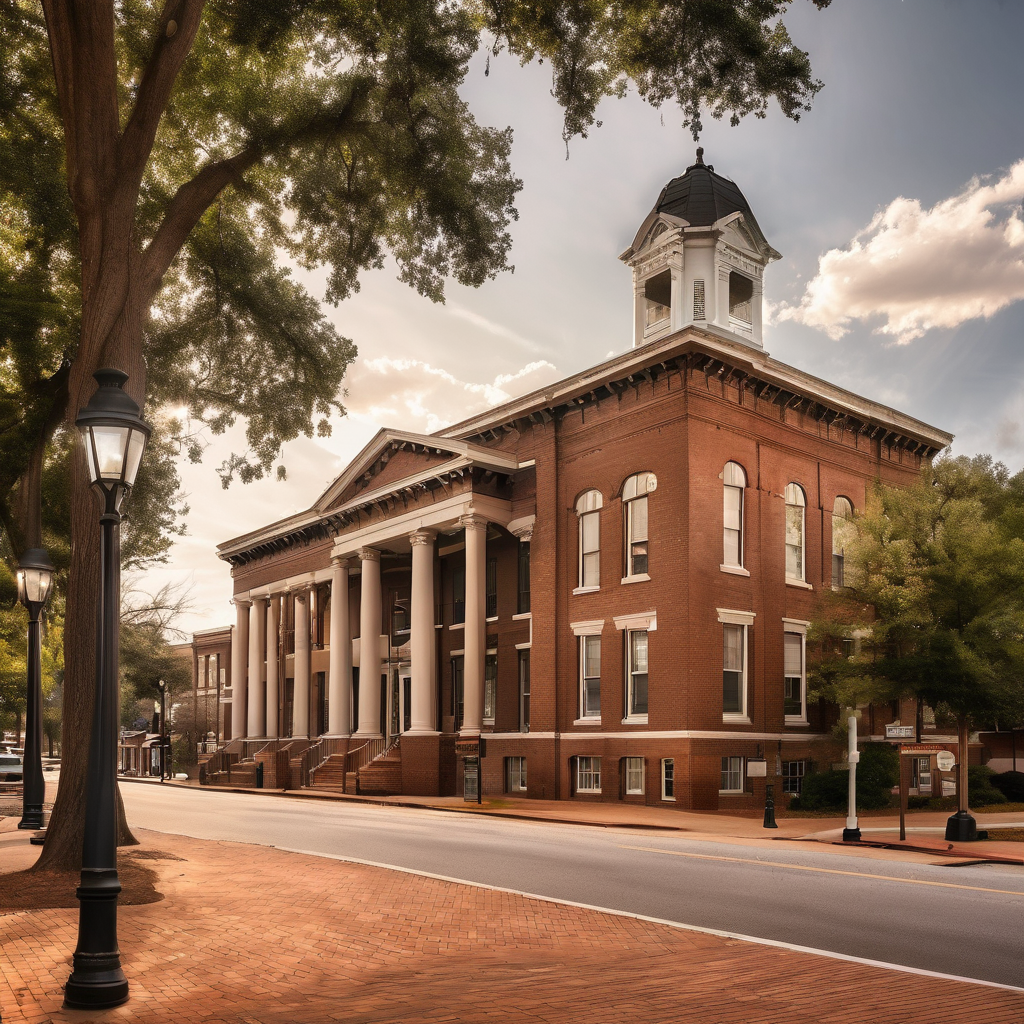
Walk into the heart of downtown Anderson today, and you'll find yourself standing where generations of Electric City residents have conducted business, celebrated milestones, and shaped the community's future. Anderson SC courthouse square history stretches back nearly two centuries, making it one of our most enduring landmarks and the true center of what would become South Carolina's first electrically powered city.
The courthouse square represents more than just a government building surrounded by streets – it's been Anderson's commercial and social hub since the city's founding in 1826. From the early days when horse-drawn carriages carried farmers to market, through the revolutionary arrival of electricity in 1895, to today's vibrant downtown revival, this single block has witnessed and anchored every chapter of Anderson's remarkable story.
Understanding the courthouse square's evolution helps us appreciate how Anderson transformed from a small county seat into the thriving Electric City we know today, complete with its unique blend of historic charm and modern innovation.
When Anderson was incorporated in 1826 and named after Revolutionary War General Robert Anderson, city planners followed the traditional Southern model of centering the community around a courthouse square. This wasn't just about convenience – it was about creating a focal point that would naturally draw commerce, government, and social life together in one accessible location.
The first courthouse was a modest wooden structure that reflected the practical needs of a frontier county seat. Anderson County was still largely agricultural, with cotton serving as the primary economic driver. Farmers would travel from across the county to conduct legal business, trade goods, and catch up on news. The square became the natural gathering place where information flowed as freely as commerce.
By the 1840s and 1850s, the area around the courthouse square began filling with essential businesses. General stores, banks, lawyers' offices, and boarding houses clustered around the government building, creating Anderson's first true business district. The square served as the weekly market location, where local farmers could sell produce and livestock while townspeople could purchase necessities they couldn't produce themselves.
These early decades established patterns that would persist well into the 20th century. The courthouse square wasn't just where you went for official business – it was where you went to see people, hear news, and participate in the community's economic life.
The 1890s brought revolutionary change to Anderson's courthouse square and the entire downtown area. When Anderson became the first city in the Southeast to have electric streetlights in 1895, earning its nickname "The Electric City," the courthouse square was among the first areas illuminated by this modern marvel.
Electric lighting transformed how people used downtown Anderson. Evening business hours became practical, social events could extend past sundown, and the courthouse square gained a new prominence as a symbol of Anderson's progressive spirit. The installation of electric streetlights around the square represented more than just improved visibility – it announced to the region that Anderson was embracing the future.
This period also saw significant upgrades to the courthouse itself. The growing population and increased business activity demanded a more substantial government building. The courthouse square began to reflect Anderson's rising status as a regional commercial center, with improved sidewalks, landscaping, and the kind of civic improvements that attracted additional businesses and residents.
The electric lighting also made the courthouse square a more attractive location for evening social activities and community events. This innovation helped establish patterns of community gathering that continue today with events like Soiree on the Square, which draws thousands to downtown Anderson for evening entertainment and socializing.
The early 1900s through the 1950s marked the courthouse square's golden age as Anderson's unquestioned commercial heart. During this period, the area around the square became densely packed with retail stores, professional offices, banks, and restaurants. Main Street, North Main Street, and Whitner Street formed the core of a thriving business district that served not just Anderson residents, but people from throughout Anderson County and neighboring areas.
The courthouse square served as the anchor for this commercial activity. Law firms naturally clustered near the courthouse for convenience, while banks positioned themselves prominently on the square to project stability and accessibility. Department stores, pharmacies, and specialty shops filled the surrounding blocks, creating a walkable downtown district where residents could accomplish most of their shopping and business needs in a single trip.
During World War II, the courthouse square took on additional significance as a gathering place for community events supporting the war effort. Victory bond drives, scrap metal collections, and military send-offs often centered around the courthouse steps, reinforcing its role as Anderson's civic heart.
The post-war boom years saw continued growth around the courthouse square, but also the beginning of challenges that would reshape downtown Anderson. The rise of automobile culture and suburban shopping centers began drawing some retail activity away from the traditional downtown core, though professional services and government functions kept the courthouse square area vital.
After weathering some difficult decades in the 1970s and 1980s when suburban development drew activity away from downtown, Anderson's courthouse square has experienced a remarkable renaissance in recent years. City leaders, business owners, and community organizations have worked together to restore the area's vitality while preserving its historic character.
Today's courthouse square successfully balances its traditional governmental role with new commercial and cultural functions. The Anderson County Courthouse continues to serve as the center of local government, but the surrounding area now hosts a diverse mix of law offices, restaurants, specialty shops, and professional services that cater to both daytime workers and evening visitors.
Events like Soiree on the Square have helped reestablish the courthouse area as a community gathering place. These celebrations bring thousands of people downtown for food, music, and entertainment, recreating the social energy that characterized the square during its early decades.
The physical improvements to the courthouse square area have been equally impressive. Streetscape enhancements, improved lighting, landscaping, and pedestrian amenities have made the area more attractive and accessible. Historic preservation efforts have maintained the architectural integrity that gives downtown Anderson its distinctive character while accommodating modern business needs.
Throughout its long history, Anderson's courthouse square has served as the foundation of the city's legal and professional community. Generations of attorneys have established practices within walking distance of the courthouse, creating a legal district that has adapted and evolved while maintaining its essential function.
This concentration of legal and professional services around the courthouse square reflects practical considerations that remain relevant today. Attorneys need quick access to court proceedings, filing deadlines, and client meetings. Accountants, real estate professionals, and other service providers benefit from proximity to both the courthouse and the law firms that often refer business to them.
The courthouse square's business district has also been home to Anderson's financial community for well over a century. Banks have maintained prominent locations on or near the square, recognizing both the convenience for customers conducting legal business and the symbolic importance of positioning themselves at the community's center.
Over the decades, many of these downtown businesses have had to adapt their operations as they've grown, modernized their offices, or dealt with changing client needs. Professional firms that started in small offices have expanded into larger spaces, while others have consolidated or relocated as business patterns changed.
The evolution of Anderson's courthouse square business district tells a fascinating story about how professional services have adapted over the decades, and storage has played a crucial role in this ongoing transformation. Many of the law firms, accounting practices, and real estate offices that have called the courthouse area home for generations have accumulated decades of important documents, case files, and business records that require secure, organized storage.
Downtown Anderson's professional community has increasingly turned to storage solutions like those available at Bleckley Street Self Storage to manage their archival needs. Legal documents, financial records, and client files that must be retained for regulatory or reference purposes can quickly overwhelm office space, especially in the historic buildings around the courthouse square where expansion options may be limited. Our 10x10 and 10x20 units provide these established firms with convenient, secure storage that keeps important documents accessible while freeing up valuable office space for current operations.
Anderson's courthouse square was established when the city was incorporated in 1826. The first courthouse was a modest wooden structure that served as the center of Anderson County's government and the focal point for the growing community's commercial and social activities.
The courthouse square served as Anderson's natural gathering place and business center from the city's earliest days. It attracted commerce, professional services, and social activities, creating a concentrated downtown district that remained the community's heart through multiple generations of growth and change.
When Anderson became the Electric City in 1895, electric streetlights around the courthouse square enabled evening business hours and social activities. This innovation made downtown Anderson more attractive and functional, helping establish patterns of community gathering that continue today with events like Soiree on the Square.
The courthouse square historically attracted law firms, banks, general stores, restaurants, and professional services. This mix reflected both practical needs (lawyers wanting proximity to the courthouse) and the square's role as Anderson's primary commercial and social center.
Many professional services around Anderson's courthouse square require storage for legal documents, financial records, and archived files that must be retained but aren't needed daily. Storage facilities like Bleckley Street Self Storage help these businesses manage their space efficiently while keeping important materials secure and accessible.
Anderson's courthouse square remains what it has always been – the place where our community's past, present, and future intersect. From its humble beginnings in 1826 to its current role in downtown Anderson's renaissance, this single block has consistently reflected the Electric City's character, challenges, and aspirations. Whether you're researching family history at the courthouse, enjoying an evening event, or simply appreciating the blend of historic architecture and modern vitality, the courthouse square continues to embody what makes Anderson special.
Visit Bleckley Street Self Storage at 401 Bleckley St to learn more about how we help Anderson's businesses and residents preserve what matters most. Call us at (864) 351-4023 to discover storage solutions that work for your needs, with our first month free special for new customers.