
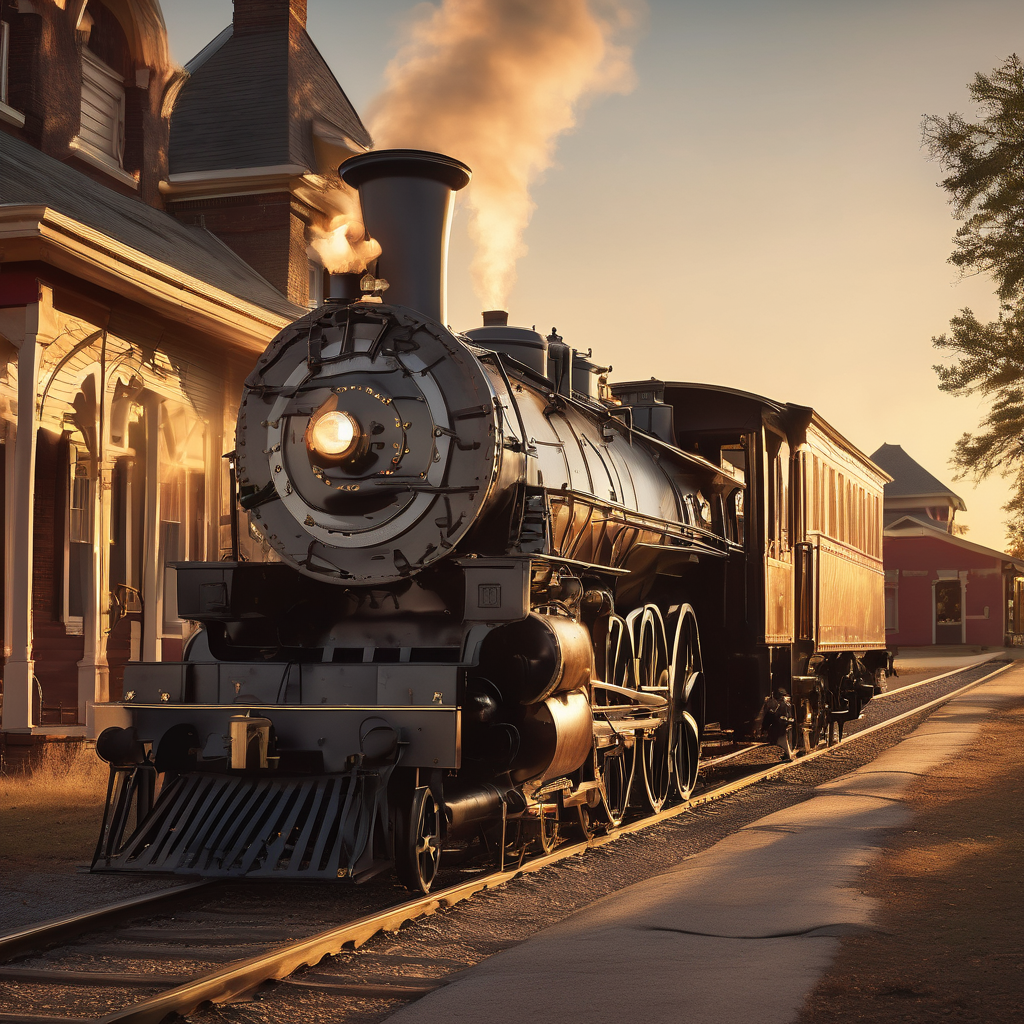
Long before Anderson SC became known as the Electric City, it was the sound of steam whistles and the rumble of iron wheels that announced the town's transformation from a quiet courthouse community to a bustling commercial hub. The arrival of the Blue Ridge Railroad in the 1850s didn't just connect Anderson to the outside world — it fundamentally changed the trajectory of what would become one of South Carolina's most dynamic cities.
Walking through downtown Anderson today, past the historic courthouse and along Main Street, it's easy to imagine the excitement that must have filled the air when that first locomotive pulled into town. The railroad didn't just bring passengers and freight; it brought possibilities that local residents had never dared to dream.
The Blue Ridge Railroad represented one of the most ambitious engineering projects of the antebellum South. Chartered in 1852, the railroad was designed to connect Anderson with Charleston through a network that would eventually span the challenging terrain between the coastal lowcountry and the Blue Ridge foothills.
The route through Anderson County required careful planning. Engineers had to navigate the rolling hills that make our area so beautiful today — the same topography that draws visitors to nearby Lake Hartwell and the scenic drives toward Clemson University. Construction crews worked through dense forests and across numerous creeks, including the Three and Twenty Creek that still flows through parts of Anderson.
By 1853, the railroad had reached Anderson, with the depot strategically located to serve both the existing courthouse community and the rural areas that would eventually become neighborhoods like Boulevard and North Anderson. The depot quickly became the heart of commercial activity, with warehouses and businesses sprouting up along the tracks to handle the increasing flow of goods and passengers.
The impact of the Blue Ridge Railroad on Anderson's economy was immediate and lasting. Before the railroad, Anderson County farmers struggled to get their cotton and other crops to distant markets. The journey to Charleston by wagon could take weeks and was expensive and uncertain.
The railroad changed everything overnight. Cotton that once rotted in fields waiting for wagon transport could now reach Charleston markets within days. Local merchants could order goods from distant cities and expect reliable delivery. The population began to grow as families moved to Anderson to take advantage of the new economic opportunities.
Perhaps most importantly, the railroad laid the groundwork for Anderson's later industrial development. The reliable transportation links made it feasible for entrepreneurs to establish mills and factories, knowing they could get raw materials in and finished products out efficiently. This industrial foundation would prove crucial when Anderson became the first city in the Southeast to harness electricity for municipal use in 1895, earning its nickname as the Electric City.
While the Blue Ridge Railroad was the first to reach Anderson, it wasn't the last. The success of that initial rail connection led to the development of additional lines that further enhanced Anderson's position as a regional transportation hub.
The Anderson Branch of the Southern Railway connected the city to the broader Southern rail network, enabling even more efficient movement of passengers and freight. Depot workers became familiar faces in the community, and the rhythm of train schedules helped organize daily life for Anderson residents.
Local businesses adapted their operations around train arrivals and departures. Farmers timed their harvests to coincide with shipping schedules. Merchants planned their inventory around freight deliveries. The railroad didn't just serve Anderson — it became woven into the fabric of how the community operated.
The railroad infrastructure that developed around Anderson created a ripple effect that shaped the city's physical layout for generations. Streets were oriented to provide access to the depot and freight yards. Residential neighborhoods developed along railroad corridors, particularly in areas that are now central Anderson.
The freight yards and maintenance facilities required substantial space and support buildings. These industrial areas attracted related businesses — blacksmith shops, grain elevators, cotton warehouses, and general merchandise stores. The economic activity generated by the railroad created jobs not just for railroad workers, but for the entire ecosystem of businesses that supported rail operations.
Even as passenger service eventually gave way to automobile travel, freight service remained crucial to Anderson's economic development. The railroad connections enabled the textile mills that dominated Anderson's economy for much of the 20th century to efficiently receive raw cotton and ship finished goods to markets across the country.
The railroad era left Anderson families with treasured pieces of local history — vintage train schedules, railroad lanterns, conductor's uniforms, ticket stubs from long-ago journeys, and photographs documenting the bustling depot activity. Many Anderson County residents have inherited railroad memorabilia from grandparents and great-grandparents who worked for the Blue Ridge Railroad or later Southern Railway operations.
These historical artifacts require thoughtful storage to preserve them for future generations. Railroad documents and photographs are particularly vulnerable to humidity and temperature fluctuations that can cause irreversible damage. At Bleckley Street Self Storage, we've helped several local families organize and protect their railroad collections alongside other family heirlooms. Our secure, accessible units at 401 Bleckley Street provide a safe environment for preserving everything from framed depot photographs to vintage railroad tools that tell the story of Anderson's transportation heritage.
The Blue Ridge Railroad was a railway line chartered in 1852 that connected Anderson to Charleston and other major cities, dramatically improving transportation and commerce in the region.
The Blue Ridge Railroad arrived in Anderson in 1853, establishing the city as an important transportation hub in the South Carolina upcountry.
The railroad provided the reliable transportation infrastructure that enabled Anderson's industrial development, which in turn created the economic conditions that supported the city's pioneering adoption of electricity in 1895.
While passenger service ended decades ago, freight rail service continues to serve Anderson. Much of the original railroad infrastructure has been repurposed or developed, but the transportation corridors established by the railroad still influence the city's layout today.
Yes, we provide secure storage for historical artifacts and family heirlooms. Our units at 401 Bleckley Street offer 24/7 access and security surveillance to protect valuable railroad memorabilia and other treasured items from Anderson's past.
The Blue Ridge Railroad's arrival in Anderson SC marked the beginning of a transformation that continues to this day. From a rural courthouse town to the Electric City to today's thriving community near Lake Hartwell and Clemson University, the railroad laid the tracks for Anderson's remarkable journey. The next time you drive through downtown Anderson or visit the historic courthouse area, take a moment to imagine the steam whistles that once announced a bright new future for our community. To learn more about preserving your own pieces of Anderson history or for storage solutions, contact Bleckley Street Self Storage at (864) 351-4023.