
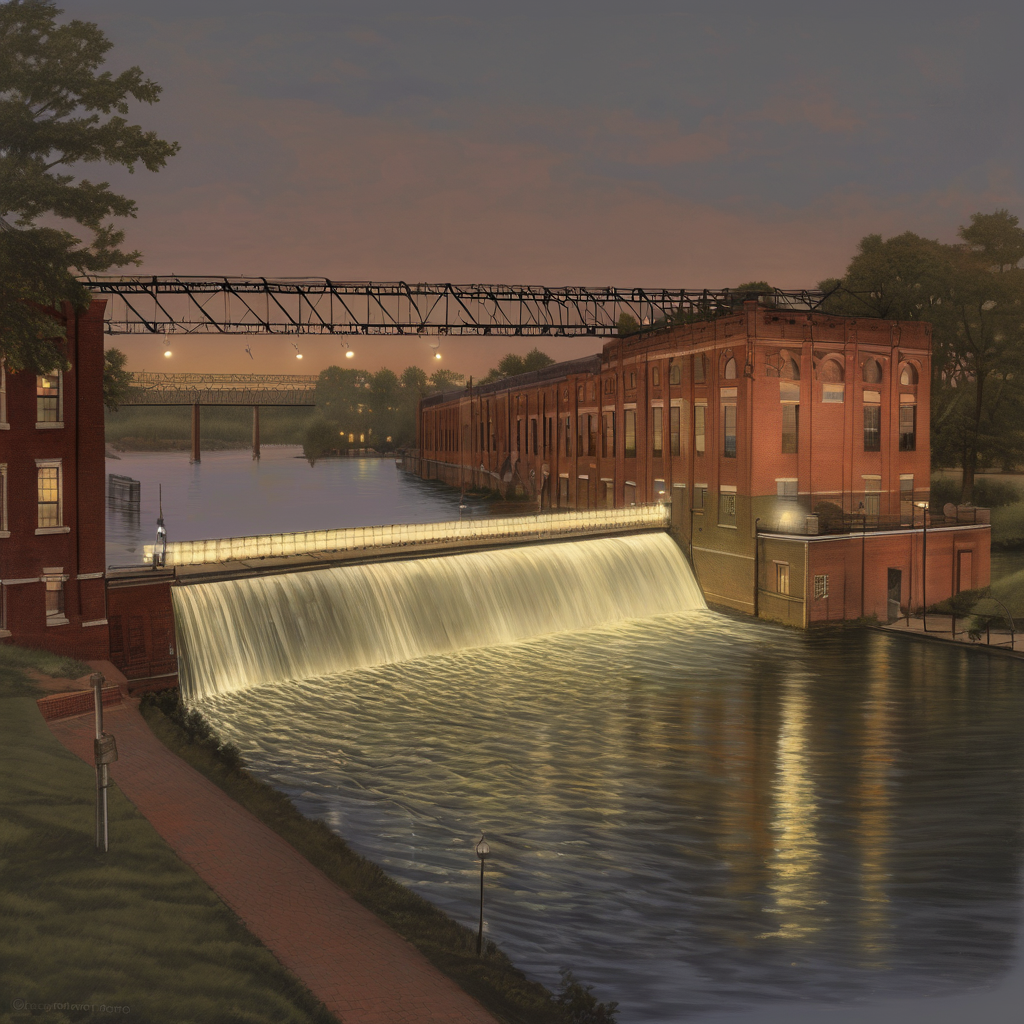
When visitors see the Electric City Trolley making its rounds through downtown Anderson or notice the "Electric City" signs welcoming them to our community, they're witnessing the legacy of a remarkable transformation that began over 125 years ago. Anderson's journey from a small county seat to the first electrified city in the Southeast is a story of vision, innovation, and the power of flowing water. The Anderson SC Electric City history begins with the roaring waters of the Seneca River and a dam that would change everything.
Long before Lake Hartwell existed, the Seneca River carved its path through the Piedmont, creating natural shoals that would become the foundation of Anderson's electric future. In the 1890s, when most American cities still relied on gas lamps and candlelight after dark, Anderson was about to become a beacon of progress in the developing South.
The story of Anderson's electrification begins with William C. Whitner, a local businessman and entrepreneur who saw potential in the rushing waters of the Seneca River. In the early 1890s, Whitner recognized that the natural drop at Portman Shoals could generate the hydroelectric power needed to bring electricity to Anderson County. This wasn't just about lighting streets and homes—it was about positioning Anderson as a modern industrial center that could attract new businesses and families to the area.
Whitner partnered with other local investors to form the Anderson Water, Light and Power Company in 1894. Their ambitious plan required significant engineering expertise and financial backing, but the potential rewards were enormous. Electricity wasn't just a convenience; it was the key to industrial development, particularly for textile manufacturing, which was becoming increasingly important throughout the South.
The location at Portman Shoals, just a few miles from downtown Anderson, offered the perfect combination of water flow and elevation drop needed for hydroelectric generation. The rushing waters that had carved this landscape over thousands of years would now power Anderson's entry into the modern age.
Construction of the Portman Shoals Dam began in earnest in 1894, representing one of the most ambitious infrastructure projects ever undertaken in Anderson County at that time. The engineering challenges were significant—building a sturdy dam across the Seneca River required careful planning, quality materials, and skilled workers who understood both masonry and the principles of hydroelectric generation.
The dam itself was constructed using local stone and concrete, creating a structure designed to harness the river's power while withstanding the inevitable floods and seasonal variations in water flow. The powerhouse, built adjacent to the dam, housed the turbines and generators that would convert the river's kinetic energy into electrical current.
By 1895, the system was operational, and Anderson became the first city in the Southeast to have electric streetlights. The transformation was immediate and dramatic. Streets that had been dark after sunset were now illuminated by the steady glow of electric bulbs. Businesses could extend their operating hours, and the city took on a completely different character after dark.
The success of the Portman Shoals facility went beyond just lighting. The reliable electricity it provided attracted textile mills and other manufacturing operations to Anderson, creating jobs and drawing new residents to the area. The city's population began to grow as word spread about the opportunities available in this newly electrified community.
The arrival of reliable electricity transformed Anderson's economic landscape almost overnight. Textile manufacturers, who had previously relied on water wheels and steam power, could now operate their machinery with the steady, consistent power that only electricity could provide. This gave Anderson a significant competitive advantage over other communities in the region.
The Orr Cotton Mills, which had been operating since the 1880s, expanded their operations significantly once electric power became available. New mills followed, drawn by the promise of reliable, affordable electricity. The Equinox Mill, Gluck Mill, and other textile operations established themselves in Anderson, creating hundreds of jobs and transforming the city's character from a rural county seat to an industrial center.
The electric streetcar system, which began operation in the early 1900s, connected different parts of the growing city and made it easier for workers to commute to the mills. The streetcars ran on electricity generated at Portman Shoals, creating a visible symbol of how the dam was powering every aspect of daily life in Anderson.
Residential growth followed industrial expansion. New neighborhoods developed as mill workers and their families settled in Anderson. The Boulevard area, North Anderson, and other residential districts grew rapidly during this period, as families moved to the Electric City seeking steady employment and modern conveniences like electric lighting in their homes.
The Anderson SC textile industry electricity connection ran deeper than simply powering machinery. Electric lighting allowed mills to operate multiple shifts safely, dramatically increasing production capacity. The consistent power supply meant fewer interruptions and higher quality products, giving Anderson mills a reputation for reliability that extended throughout the Southeast and beyond.
Mill villages grew up around the major textile operations, each one a small community within the larger city. These villages had their own company stores, recreational facilities, and social structures, all powered by electricity from the Portman Shoals Dam. The mill workers and their families formed the backbone of Anderson's growing population, and their success was directly tied to the reliable power that made the mills competitive.
The skills developed in Anderson's textile industry during this electric age would serve the community well for decades. Even as the textile industry eventually declined in the late 20th century, the industrial infrastructure and workforce expertise that developed during the Electric City's heyday would attract new manufacturers like Bosch and other modern employers to Anderson County.
For Anderson residents in the 1890s and early 1900s, the transformation to electric power changed daily life in countless ways. Electric streetlights made evening walks safer and more pleasant. Businesses could stay open later, creating a more vibrant downtown atmosphere. The electric streetcar system connected different parts of the city, making it easier for families to visit friends, attend events, and conduct business.
The Electric City Trolley that operates today echoes those early streetcars, reminding residents and visitors of Anderson's pioneering role in bringing electricity to the Southeast. The pride that Anderson residents felt in their city's modern conveniences was justified—they were living in one of the most advanced communities in the entire region.
Churches, schools, and civic organizations all benefited from electric lighting, extending their activities into evening hours and creating new opportunities for community involvement. The Anderson County Courthouse, which had been lit by gas lamps, was among the first public buildings to receive electric lighting, symbolizing the city's commitment to progress and modernization.
The industrial transformation that made Anderson the Electric City created countless family stories, artifacts, and documents that tell the story of this remarkable period. Many Anderson families have photographs from the early mill days, vintage electrical equipment, company records, and personal documents that chronicle their ancestors' roles in building the Electric City. These items represent irreplaceable pieces of Anderson's industrial heritage.
Preserving these historical artifacts requires proper storage conditions to protect them from humidity, temperature fluctuations, and other environmental factors that can damage old photographs, documents, and equipment over time. At Bleckley Street Self Storage, we understand how important these family treasures are to Anderson's ongoing story. Our 401 Bleckley Street location provides secure, accessible storage for families who want to preserve their Electric City heritage items, whether they're transitioning between homes, decluttering, or simply ensuring these precious memories are protected for future generations.
Anderson earned the nickname "Electric City" in 1895 when it became the first city in the Southeast to have electric streetlights, powered by the newly completed Portman Shoals Dam on the Seneca River.
The original dam was submerged when Lake Hartwell was created by the U.S. Army Corps of Engineers in the 1960s. The lake now covers the site where Anderson's electric transformation began.
Electric power allowed textile mills to operate multiple shifts safely, increase production capacity, and improve product quality. This gave Anderson mills a competitive advantage and attracted new manufacturing operations to the city.
Yes, several mill buildings and structures from the early electric era still stand in Anderson, though many have been repurposed for different uses. The downtown area also retains some buildings from this transformative period.
Bleckley Street Self Storage offers secure 10x10 and 10x20 units with 24/7 access and surveillance. While we don't offer climate-controlled units, our facility provides a safe, accessible option for storing family artifacts, documents, and other historical items from Anderson's Electric City heritage.
Today, as we drive through Anderson and see the thriving businesses, residential neighborhoods, and recreational opportunities around Lake Hartwell, we're witnessing the ongoing legacy of that bold decision to harness the Seneca River's power in 1895. The vision and determination that created the Electric City continue to shape Anderson's character, reminding us that sometimes the most transformative changes begin with recognizing the potential in what surrounds us. Whether you're exploring Anderson's history, planning a move to our community, or looking for secure storage for your own family's treasures, remember that you're part of a story that began with rushing water and the bright promise of electric light.